
Defensible Space Resources
Defensible Space – Protect Your Home from Wildfire
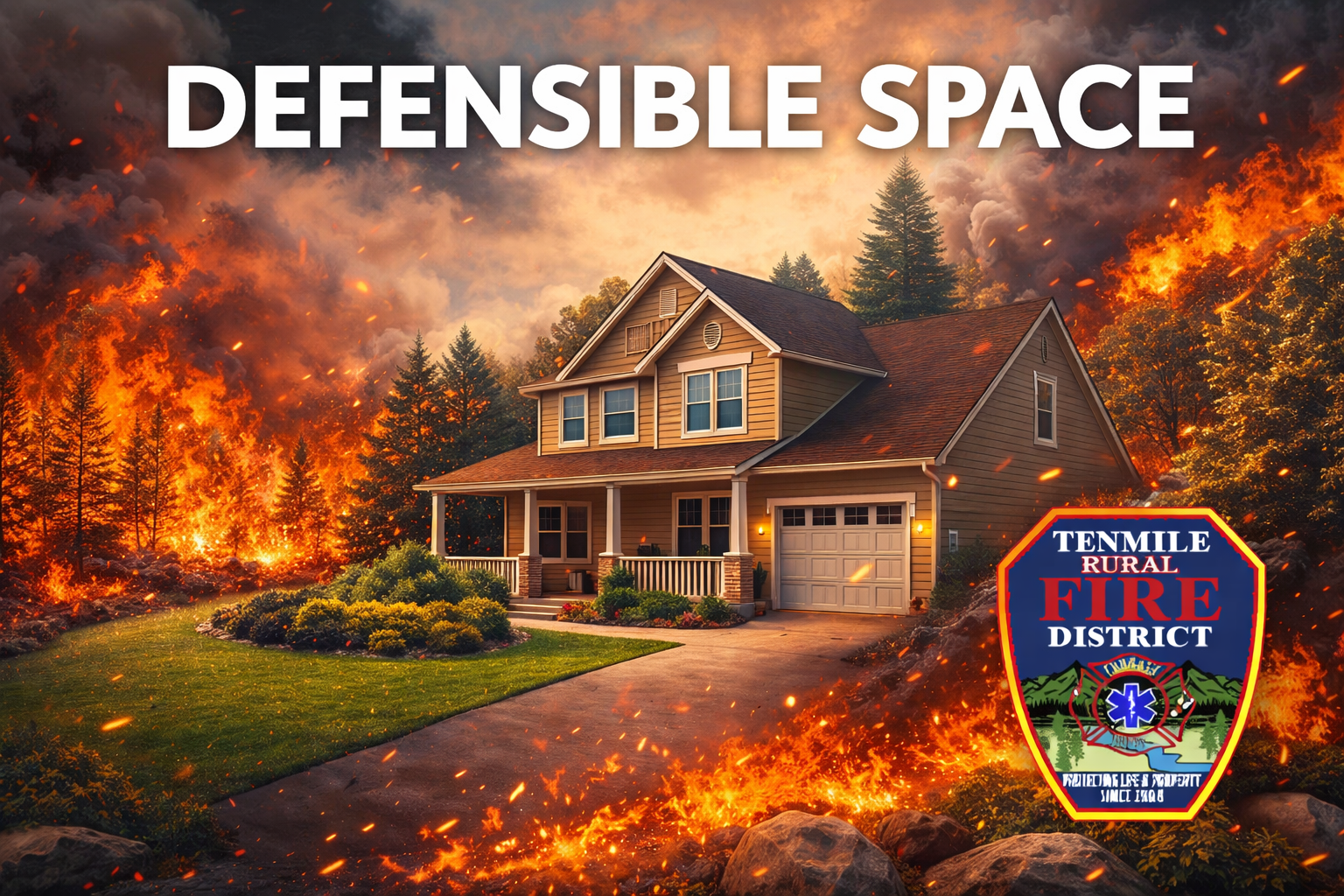
Wildfire risk in Oregon continues to grow. Creating and maintaining defensible space around your home and structures is one of the most effective ways to reduce the chance that wildfire will damage or destroy your property. Defensible space is a managed zone between your home and the surrounding vegetation where fuels have been reduced to slow the spread of wildland fire and help firefighters protect your home. Oregon.gov
What Is Defensible Space?
Defensible space is the buffer you create between your home and nearby wildland vegetation—including grass, shrubs, and trees—so that fire either slows down or stops before it reaches your home. Proper defensible space helps reduce ember ignition, gives firefighters a safer area to work in, and improves overall safety during a wildfire event. Oregon.gov
Wildfire embers can travel up to miles ahead of the main fire front, and embers are responsible for the majority of structure ignitions during wildfires. Creating defensible space significantly increases your home’s chance of survival. Oregon.gov
🔗 Learn more from the Oregon State Fire Marshal:
OSFM Defensible Space Program
https://www.oregon.gov/osfm/wildfire/pages/defensiblespace.aspx
🔗 Defensible Space Resources
📋 Oregon Defensible Space Checklist & Homeowner Guide
- The Oregon State Fire Marshal (OSFM) provides a detailed Defensible Space Homeowner Guide with practical tips for every part of your property—roof, vents, siding, decks, fences, vegetation, and more.
- This guide includes the official Defensible Space Checklist you can use to assess and improve your property.
-
Download the full guide:
2025 OSFM Defensible Space Homeowner Guide (PDF) — https://www.oregon.gov/osfm/Documents/2025DSHomeownersGuide.pdf
👉 The first 5 feet around your home is the most critical zone. Removing flammable materials and vegetation in this area creates a protective shield and dramatically reduces ignition risk. Oregon.gov
🌿 Fire-Resistant Plants Guide
Choosing the right plants and landscaping materials is a key part of creating defensible space.
- Oregon State University Extension has a Fire-Resistant Plants Guide that helps you select low-flammability plants for your home landscape.
- The guide explains plant characteristics that reduce fire risk and offers planting suggestions for different defensible space zones.
📄 Fire Resistant Plants for Home Landscapes — https://extension.oregonstate.edu/sites/extd8/files/documents/lommena/pnw-590-fire-resistant-plants-compressed.pdf
✔ Fire-resistant plants typically have higher moisture content, low dead matter, and small, well-spaced growth that helps slow the spread of fire. OSU Extension Service
🔥 Living With Fire – How to Make Your Home Fire Safe
The Living With Fire program offers easy-to-follow guidance on making your home safer from wildfire. This resource covers key topics such as:
- Practical steps to prepare your house, yard, and landscape
- How structural features like roof materials, vents, and decks influence safety
- Landscaping techniques to slow fire spread
- Seasonal maintenance and evacuation planning
📌 Learn more:
How to Make My Home Fire Safe — https://www.livingwithfire.org/get-prepared/how-to-make-my-home-fire-safe/
Key Defensible Space Practices
Here are some core actions to take:
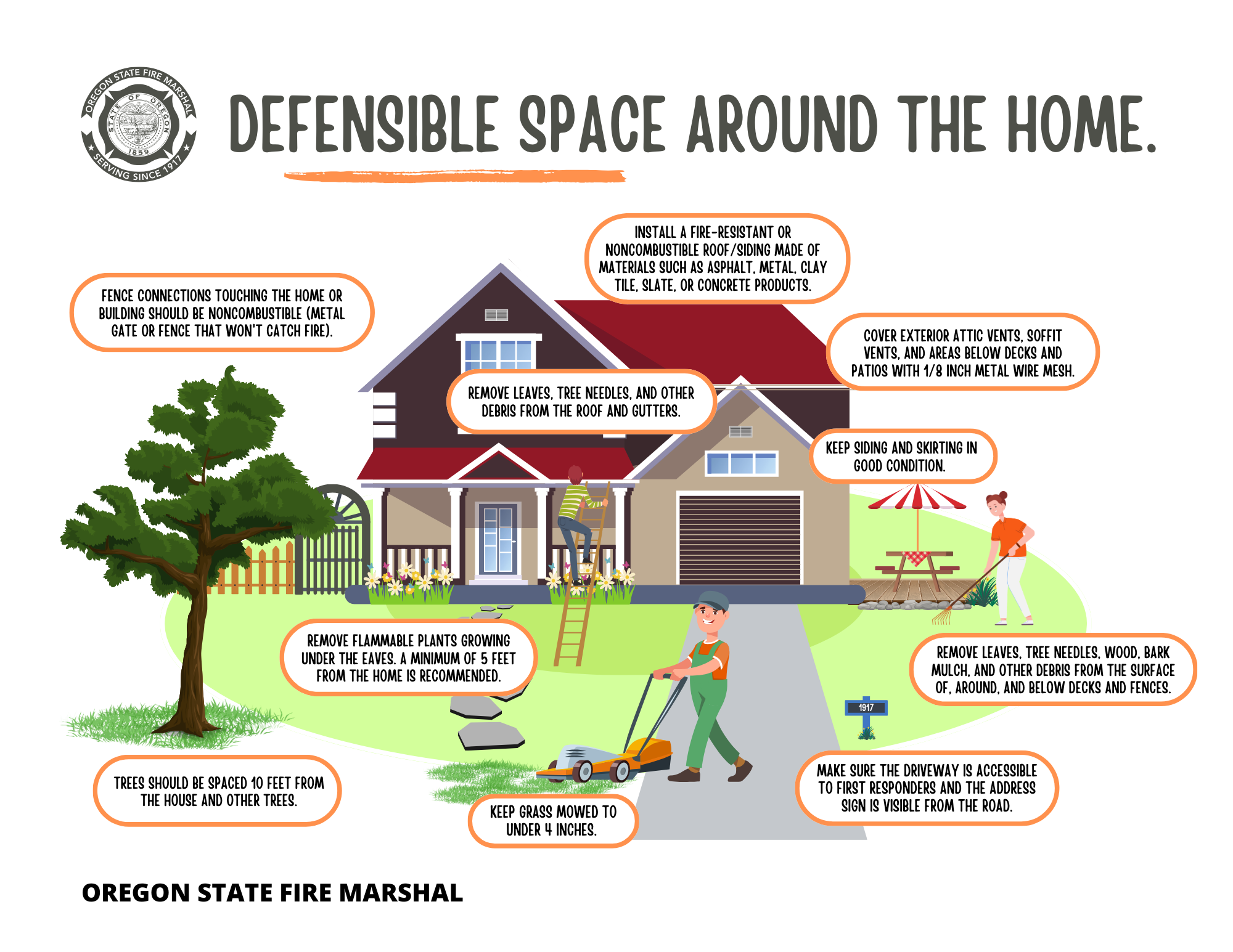
🧱 Immediate Zone (0–5 feet from your home)
- Remove all combustible vegetation and mulch.
- Use non-flammable surfacing like gravel or pavers.
- Keep this area clear of firewood, debris, and materials that can burn. Oregon.gov
🌱 Intermediate Zone (5–30 feet)
- Space trees, shrubs, and plants so flames cannot easily spread from plant to plant.
- Choose fire-resistant plants and keep grass mowed low. Oregon.gov+1
🌳 Extended Zone (30–100+ feet)
- Thin dense vegetation and remove ladder fuels—low branches that help fire climb into tree canopies.
- Maintain spacing between tree crowns and from structures. Oregon.gov
Maintenance Matters
Defensible space is not “set and forget.” Vegetation regrows, debris accumulates, and conditions change. Regular maintenance—especially before and during fire season—ensures your defensible space remains effective. OSU Extension Service
Final Tips
✅ Start with small projects and expand over time.
✅ Work outward from your home.
✅ Coordinate with neighbors for larger properties or shared boundaries.
✅ Visit and download the resources above for checklists and detailed guidance.
🏠 Schedule a Defensible Space Assessment
Tenmile Fire & Rescue offers Home Wildfire Assessments to help residents identify wildfire risks and receive personalized recommendations for improving defensible space around their property.
✔ Free
✔ Educational
✔ Non-regulatory
🔗 Schedule a Defensible Space / Home Wildfire Assessment:
https://www.tenmilefire.org/home-wildfire-assessment
Ongoing Maintenance Is Key
Defensible space requires regular upkeep. Vegetation grows, leaves accumulate, and conditions change throughout the year. Annual maintenance—especially before and during fire season—is essential to keep your home protected.